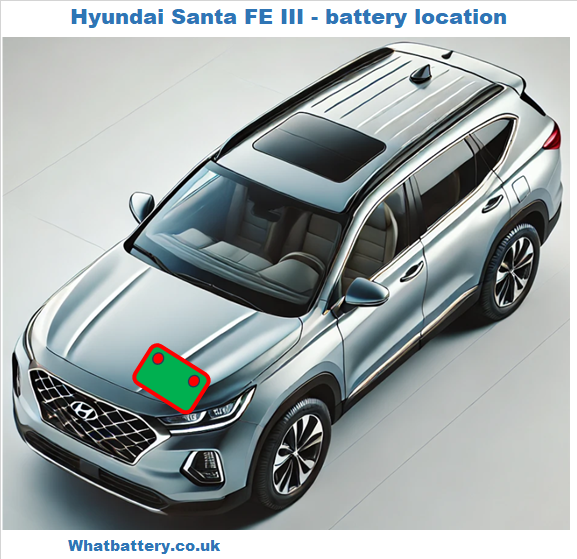
 Choosing the right battery for your Hyundai Santa Fe III (DM) model produced from 2012 onwards is a crucial decision that affects the reliability and overall performance of your vehicle. This generation of the Santa Fe, regardless of whether you have a petrol or diesel engine, or a 4WD version, shares a number of similarities when it comes to battery requirements, but there are also some unique aspects worth considering. Let’s delve into the most important factors to help you make an informed choice and ensure peace of mind each time you start your engine.
First and foremost, it’s important to note that all the engine variants listed for the Hyundai Santa Fe III (DM) in the given data—ranging from the 2.4 liter petrol engines (both standard and 4WD) to the diesel options such as the 2.0 CRDi and 2.2 CRDi (with and without 4WD)—are NOT equipped with a Start-Stop system. This is a key piece of information, as vehicles with Start-Stop systems require batteries built to withstand frequent cycling and deeper discharges, usually in the form of AGM or EFB types. For your Santa Fe III, a conventional flooded lead-acid battery (sometimes called SLI—starting, lighting, ignition) is sufficient and, in fact, recommended.
When it comes to technical specifications, the ideal battery for this vehicle should have a capacity (Ah) between 95 and 100 ampere-hours. This range is optimal for the electric demands of the car, ensuring that there’s enough reserve power even during cold winters or periods of higher-than-usual electrical consumption. Another critical parameter is the cold cranking amps (CCA), which should fall between 720 and 830 amps. Adequate CCA is essential, particularly for diesel engines, as they generally require more power to start, especially in low temperatures. However, petrol engines in this model, such as the 2.4, also benefit from a robust CCA rating for reliable operation.
An interesting detail about the Hyundai Santa Fe III is the type of battery mounting it uses. While many modern vehicles commonly use the B13 mounting standard, this particular model requires batteries with B01, B1, or Korean B1 mounting. This is a notable distinction, as it means that some of the most popular battery models on the market might not fit unless they are available in these specific mounting configurations. Therefore, when purchasing a new battery, it’s imperative to check not only the electrical specifications but also the physical compatibility, including the hold-down type and terminal layout.
As for brands and models, there are several reputable manufacturers that offer batteries meeting these criteria. Some of the suitable, exemplary battery models include Bosch S40 28, Exide EA954, Exide EB954, Lucas LS249, and Varta G7. These are not the only options available, but they are representative of the quality and specifications that you should look for. Always ensure that the battery you select matches or exceeds the capacity and CCA ratings specified above, and that the mounting type is precisely what your Santa Fe requires. It’s worth noting that the compatibility of these batteries has been tested and confirmed for the Hyundai Santa Fe III, making them a safe and reliable choice.
One intriguing aspect of the Santa Fe III’s battery setup is its focus on reliability and ease of maintenance. Lead-acid batteries are generally more affordable and widely available compared to AGM or EFB types, and they can be replaced or serviced at almost any garage. However, always remember to double-check the vehicle’s owner manual or consult with a trusted automotive specialist when in doubt. Sometimes, minor variations in trims or regional markets can result in subtle differences in battery compartments or electrical systems.
A fun fact about battery technology in modern vehicles: even though advancements like Start-Stop systems and mild hybridization are becoming increasingly common, the classic flooded lead-acid battery remains the backbone for many larger SUVs like the Santa Fe III. This is a testament to the robustness and reliability of this technology, which has been continually improved over more than a century of automotive evolution.
In summary, when choosing a battery for your Hyundai Santa Fe III (DM) from 2012 onwards, prioritize a high-quality, conventional flooded lead-acid battery with a capacity between 95 and 100 Ah and a CCA of 720 to 830 amps. Don’t overlook the importance of the correct mounting type—B01, B1, or Korean B1—and consider reputable models such as Bosch S40 28, Exide EA954, Exide EB954, Lucas LS249, or Varta G7 as exemplary fits. With the right battery, your Santa Fe will continue to deliver dependable performance for years to come.
Hyundai Santa Fe in version III (DM) is produced from 2012. We invite you to a list of batteries matching individual engine versions.
Basic parameters of batteries suitable for Hyundai Santa Fe (2012-):
| Layout | Terminal types | Base hold-down |
|---|---|---|
| 0 – positive on the right side | 1 | Korean B1 |
| 0 – positive on the right side | 1 | B01 |
| 0 – positive on the right side | 1 | B1 |
Hyundai Santa Fe III (DM) – petrol engines:
- 2.4
- 2.4 4WD
| Model | Capacity and CCA | Dimensions (LxWxH) | Price |
|---|---|---|---|
| Bosch S4 S40 28 | 95 Ah 830 A | 306x173x225 mm | More |
| Exide Premium EA954 | 95 Ah 800 A | 306x173x222 mm | More |
| Exide Excell EB954 | 95 Ah 720 A | 306x173x222 mm | More |
| Lucas Supreme LS249 | 100 Ah 800 A | 302x175x225 mm | More |
| Varta Blue Dynamic G7 | 95 Ah 830 A | 306x173x225 mm | More |
Hyundai Santa Fe III (DM) – diesel engines:
- 2.0 CRDi
- 2.0 CRDi 4WD
- 2.2 CRDi
- 2.2 CRDi 4WD
| Model | Capacity and CCA | Dimensions (LxWxH) | Price |
|---|---|---|---|
| Bosch S4 S40 28 | 95 Ah 830 A | 306x173x225 mm | More |
| Exide Premium EA954 | 95 Ah 800 A | 306x173x222 mm | More |
| Exide Excell EB954 | 95 Ah 720 A | 306x173x222 mm | More |
| Lucas Supreme LS249 | 100 Ah 800 A | 302x175x225 mm | More |
| Varta Blue Dynamic G7 | 95 Ah 830 A | 306x173x225 mm | More |
If you’re still unsure which battery fits your Hyundai Santa Fe , or if you want to help others in their selection, please send us a photo of your current battery in the comment section at the bottom of the page. You can also send the picture to contact@whatbattery.co.uk (we will place it in the comments to also help other users). Be sure to specify the car model, year, type, as well as the engine capacity and power. We’ll do our best to assist you!